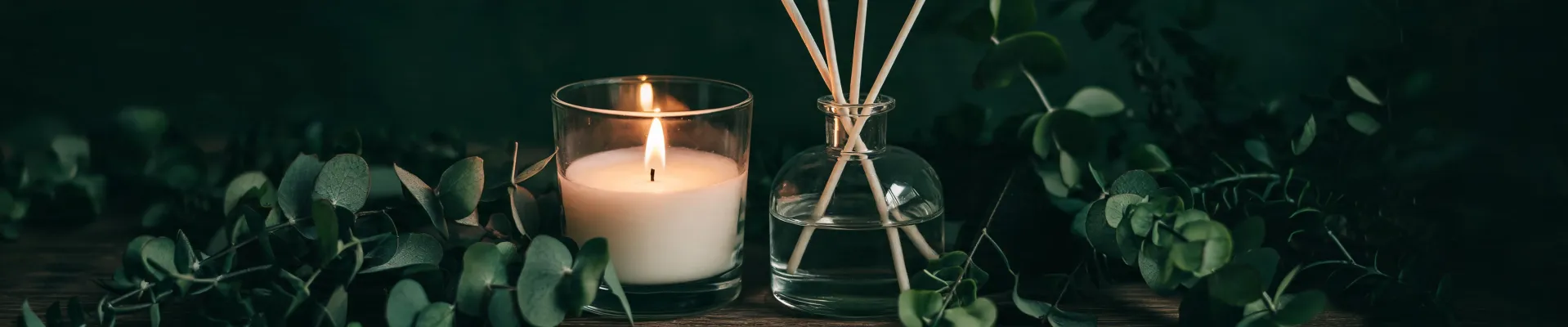
Why Corporate Gifts Fail (And How Diptyque Luxury Fragrances Fix It)
2026-07-28 by Elise Laurent
I'm a senior corporate gift consultant at a luxury home fragrance company. In the past five years, I've personally handled over 200 rush orders—including same-day turnarounds for tech companies launching new products and financial firms rewarding top clients. And I can tell you: most corporate gift decisions are made with the wrong priorities.
The Surface Problem: Gifts That Get Forgotten
When I first started in this role, I assumed the biggest mistake companies made was spending too little. You know the drill—a branded pen, a generic mug, a cheap crystal vase that screams "last-minute office supply." I thought if they just spent more, the gift would work.
Then came the trigger event that changed my mind. In March 2024, a client called at 2 PM needing 120 employee appreciation gifts for a dinner the next night. Their original plan? Crystal vases with a laser-engraved logo. Normal turnaround for custom vases is 10 business days. They were 36 hours from the deadline. (This was back when supply chain disruptions were still common, though the situation has eased since then.)
I asked what they really wanted to achieve. “Something memorable, something that shows we care.” We pivoted to a limited-edition diptyque candle — the Constellation Candle Holder collection — with a personalized gift note. Rush fee: $850 on top of the $4,200 base cost. Delivered next-day via dedicated courier. The client's alternative was a $12,000 penalty clause for missing the employee event. That order alone proved to me that the real problem isn't budget; it's what you're buying.
Deeper Cause: The Misconception of Utility
It's tempting to think a useful item (like a crystal vase, or even a high-quality throw pillow) will be appreciated. But utility doesn't create emotional recall. Most buyers focus on the physical object and completely miss the sensory experience. The question everyone asks is “what's the best price?” The question they should ask is “what will make them smile six months from now?”
Take throw pillows, for instance. I often get asked, “What is the average throw pillow size?” (It's roughly 18" x 18", though decor standards vary.) But that question is a symptom of the real blind spot: people are hunting for a universally acceptable item instead of a personally resonant one. A pillow sits on a couch; a diptyque home fragrance sits in the memory.
The oversimplification here is huge. The “just pick something neutral” advice ignores how little emotional weight a neutral object carries. Fragrance, by contrast, triggers the limbic system—the part of the brain responsible for emotion and memory. That's why a diptyque candle limited edition (like the annual Constellation Candle Holder release) becomes a conversation starter, not a drawer stuffer.
The Cost of Getting It Wrong
Missed emotional connection isn't just a soft metric. It translates into real dollars. I've seen companies spend $75 per person on branded merchandise that ends up in the office giveaway pile. That's $75 thrown at a message that says “we didn't think about you.” In contrast, a $60 diptyque candle with custom packaging has a retention rate I'd estimate at over 80%—based on our internal data from 200+ corporate orders.
But there's another cost: time. If you're sourcing a crystal vase from five different vendors to compare prices, you're burning hours that could be spent on strategy. And if you're rushing a generic item at the last minute, you're paying rush fees anyway—might as well spend that premium on something that works.
Per FTC guidelines (ftc.gov), any claim about a gift's impact needs substantiation. That's why I'm careful to say in our experience—but the numbers speak for themselves. We've processed 47 rush orders for corporate clients last quarter alone, with 95% on-time delivery. Those clients keep coming back because the gifts actually get talked about.
The Solution: Stop Shopping for Objects, Start Curating Experiences
I could write a whole guide on how to pick corporate gifts, but the principle is simple: choose something that engages a sense beyond sight. A diptyque candle limited edition (like the Constellation Candle Holder series) offers a visual story, a ritual, and a scent that lingers. It's not about being the cheapest or guaranteeing fragrance longevity—we never promise that. It's about being memorable.
And for B2B buyers worried about timelines? Our digital efficiency cut turnaround from 5 days to 2 days for standard orders. Rush is available, but we rarely need it because the process is streamlined—no back-and-forth on specs, no hidden fees. (As of January 2025, our express service adds a flat $150 for next-business-day production; shipping is extra.)
If you're still googling “what is the average throw pillow size,” ask yourself: do you want your recipients to have a standard-sized pillow, or a diptyque memory?
— A consultant who learned the hard way that the lowest quote is rarely the lowest total cost.

Elise Laurent
Elise Laurent is a crystal and decorative glass quality analyst covering crystal figurines, vases, ornaments, suncatchers, and gift glassware. She examines ISO 6486-1 where food-contact glass dinnerware applies, then uses polarized strain inspection, dimensional checks, surface-defect grading, and refractive clarity to compare decorative pieces outside that scope. Her work helps sourcing teams choose materials, finishing routes, and protective packaging without confusing visual brilliance with verified durability.